Showing posts with label Mouthwashes. Show all posts

What are the benefits of mouthwash?


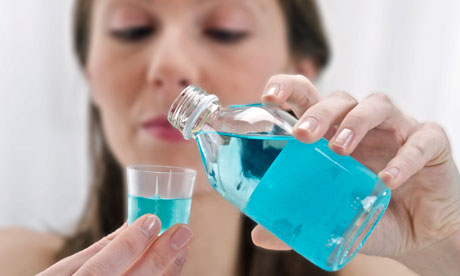
When looking constantly look white teeth and a bright smile, many people invest in treatments and products that promise a positive outcome, but not always warn about risks. A common example mouthwashes are often recommended to aid hygiene, but its formulation contains elements that can damage teeth
While most contain antibacterial rinses reach places where a toothbrush can not reach, the 'bombing' numerous commercial brands do not tell us everything we need to know. Currently, there are rinses with specific functions, depending on their composition, such as for the prevention of bad breath, those containing fluorine and optimized prevent cavities and tooth calcification, among others.
->
 
However, despite promises to serve as an ally of oral health, a recent study published in the Dental Journal of Australia said that many mouthwashes have the right amount of alcohol to cause damage and to stimulate the emergence of oral cancer. This research serves to alert those seeking a perfect smile on the need to control the use of these products. Here I had some important information mouthwashes.

Alcohol-free mouthwashes are not harmless: Although these products do not contain the evils of alcohol, can also cause side effects - such as stained teeth and altered sense of taste - if used for a long time, due to the presence of ingredients such as chlorhexidine.

Not necessarily Mouthwash fights bad breath: These products can reduce halitosis, but they are not a permanent solution. If one suffers from this disease, you should consult a dentist to find out the causes of bad breath and treat them properly.

Mouthwashes not replace brushing: Although possessing specific antibacterial, these products can not be used as a substitute for the toothbrush. It is best to use it as a complement, but must be recommended by a specialist, and often cause damage if overused.
Access to the other topics for more
Share:

Prolonged use of mouthwash use may be harmful


Mouthwashes containing a component called "chlorhexidine" which when used for a long time can cause staining on teeth, rinsed professionals in the field of oral health. The mouthwash, known also as mouthwash, is a solution that usually usually used after brushing as a way to help eliminate bacteria and microorganisms that cause cavities and of course, the bad breath.
 

What many do not know is that this mouthwash contains an antiseptic (antimicrobial) called "chlorhexidine", which is used in the manufacture of mouthwash. Excessive or prolonged use of this component causes teeth pigmentation (spots) that can be removed with professional prophylaxis. An additional effect prolonged use is a slight diminution of taste while using the product.

What should be taken into account

The mouthwash is used to treat gingivitis and periodontal diseases. They warn that it should be administered only under medical supervision, otherwise consequences can result in dental esthetics, in some cases irreversible.

One of the most effective methods of preventing decay and tartar, is through good brushing, say professionals.

Remember: the misuse or prolonged and unnecessary use of mouthwash can be harmful to your oral health.
Share:

Mouthwashes


This already is beyond me.
I never talk about this in a post, but I just made a stunning discovery, and as I am still shocked and near a computer connected, I can not help but share.
At first, with the known gingivitis, always gave me Listerine, Colgate or the rinse failing. I used it, it was gingivitis, and stopped using it.

But as we all know, change the subject to periodontitis, and there are some things started to notice with the rinses, swish either themselves, or rinses.

So far in my life I have used different types, namely: 1) mouthfuls of water and salt or baking soda (for sores mostly) 2) Listerine rinses, 3) mouthfuls of water and hydrogen peroxide Vol 10% (part of A OXIG and two parts water), 4) the effective and powerful swish of Plac Out (chlorhexidine digluconate-are great, but if it exceeds a week of use, the gum scale (very bad!) , well after use should not eat for 4 hours, and not approach things radioactive, like trying to have X-rays-).

Now, none of the above is sustainable and long-term sustainable.
The operators are not functional salt to gum care, in fact there are articles that mention it as harmful.
Hydrogen peroxide burn gums, as it is diluted and is used for short-term help remove elements must be removed, but when there is nothing to remove begins to be harmful.
Out Plac Darling, besides being expensive, not to use more than a week - do not use more than a week! -
And here the hardest. The nicely weighted Listerine has alcohol. And alcohol damages the gums.
A healthy gum, no movement could use it without problems. But we "periodontinos"-term I just invented for periodontitis we-we can not afford that luxury.
My excitement then comes on the heels of finding a mouthwash without alcohol.
I swear Oral B does not pay me to put it! but I just found, and it shows a strong change compared to Colgate mouthwash or Listerine.
If you remember when the crops are made, especially when you start, remember that ardor and force that has the product, and then everything is as "rare", as if we had taken a tequila.
This rinse does not happen, is much smoother, and cause the same effect.

Well, this post is not like the usual, but it's had to comment.

The people of Argentina, and particularly Buenos Aires, I tell them or Farmacity, or Disco, or in many places I found, but I bought it in Jumbo. There!
There is also one of colgate clarifying be without alcohol, but I never saw it.

Cheers, Sebas.
Share: